Whether you're adding a natural gas stove, fireplace, BBQ hookup, pool heater, or generator, gas line installation requires professional expertise and strict adherence to safety codes. In Ontario, it's not just recommended—it's the law. Here's what every Ottawa homeowner should know about gas line work.
Why Gas Line Work Requires a Licensed Professional
In Ontario, gas line installation and modification must be performed by a licensed G2 or G1 gas fitter registered with the Technical Standards and Safety Authority (TSSA). This isn't optional—it's a legal requirement under Ontario's Technical Standards and Safety Act. Unlicensed gas work is:
- Illegal: Fines can reach $50,000 for individuals and $100,000 for corporations.
- Dangerous: Improper gas connections can cause leaks, explosions, carbon monoxide poisoning, and fire.
- Uninsurable: Gas-related damage from unlicensed work will void your home insurance coverage.
Common Gas Line Installation Projects
Ottawa homeowners most commonly need gas line work for:
- Gas stove or range: Running a gas line to the kitchen for a new or relocated gas range.
- Gas fireplace: Installing a direct-vent gas fireplace insert or new unit.
- Outdoor BBQ hookup: Running a dedicated gas line to your deck or patio for a built-in or standalone natural gas grill.
- Pool heater: Gas pool heaters require a properly sized gas line for their high BTU demands.
- Furnace or water heater replacement: Newer high-efficiency models may require gas line upsizing.
- Backup generator: Natural gas generators need a dedicated gas line connection.
- Gas dryer: Converting from electric to gas dryer or running a line to a new laundry location.
The Installation Process
- Assessment: A licensed gas fitter evaluates your existing gas meter capacity, pipe sizes, and the route for the new line.
- Permits: A TSSA permit is obtained before any work begins. The City of Ottawa may also require a building permit depending on the scope.
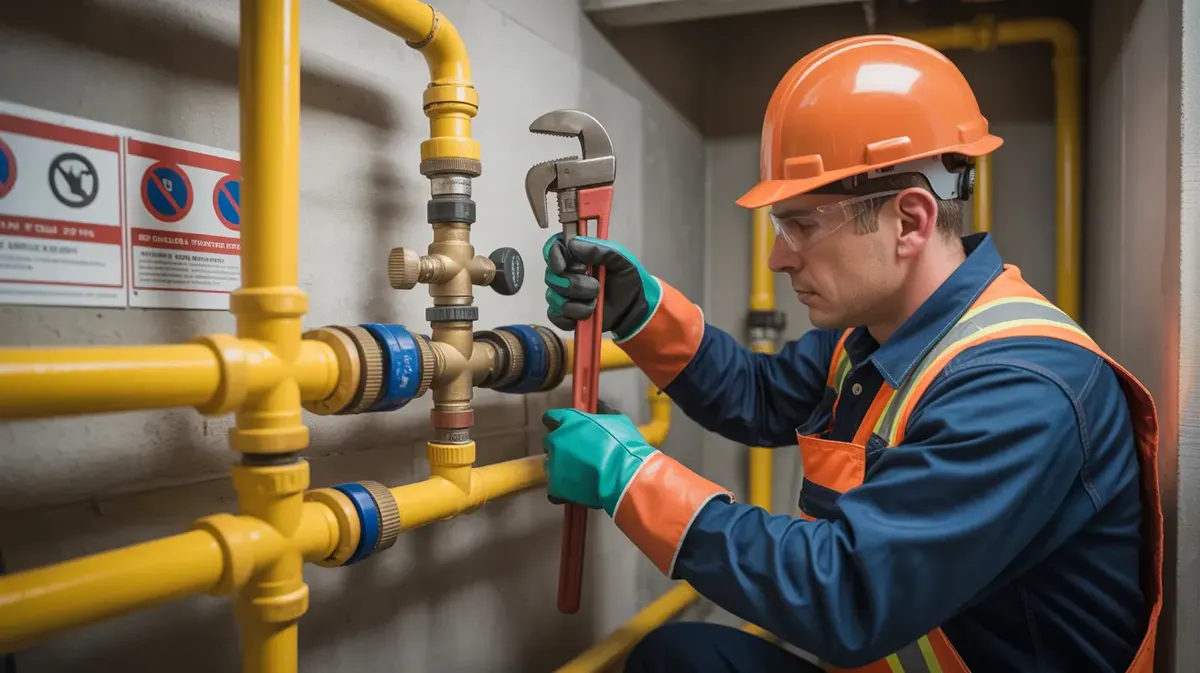
- Installation: Black iron pipe, CSST (Corrugated Stainless Steel Tubing), or copper tubing is run from the gas manifold to the appliance location. Proper support, fittings, and shutoff valves are installed.
- Pressure testing: The new line is pressure-tested to verify there are no leaks. This is a critical safety step.
- TSSA inspection: A TSSA inspector reviews the completed work and issues a compliance certificate.
- Appliance connection: Once approved, the appliance is connected, tested, and commissioned.
Gas Line Installation Costs in Ottawa
Costs vary based on pipe run length, complexity, and the number of connections:
- Simple gas line extension (under 20 feet): $300 – $700
- Moderate installation (20–50 feet, through walls/floors): $700 – $1,500
- Complex installation (long runs, multiple connections): $1,500 – $3,000+
- Gas meter upgrade (if needed): Typically handled by Enbridge at no charge, but may require scheduling.
Gas Safety Tips for Homeowners
- Know where your main gas shutoff valve is and how to operate it.
- Install carbon monoxide detectors on every level of your home and outside sleeping areas.
- Never use a gas oven or stove for heating your home.
- Keep the area around gas appliances clear and well-ventilated.
- If you smell gas (rotten egg odour), leave immediately and call Enbridge Emergency at 1-866-763-5427.
- Schedule annual gas appliance inspections by a licensed technician.
Licensed Gas Fitters in Ottawa
Dtech Services employs licensed G2 gas fitters who handle all types of residential gas line installations across Ottawa. Every installation includes proper permits, TSSA inspection, and our workmanship guarantee. Contact us for a free quote on your gas line project.